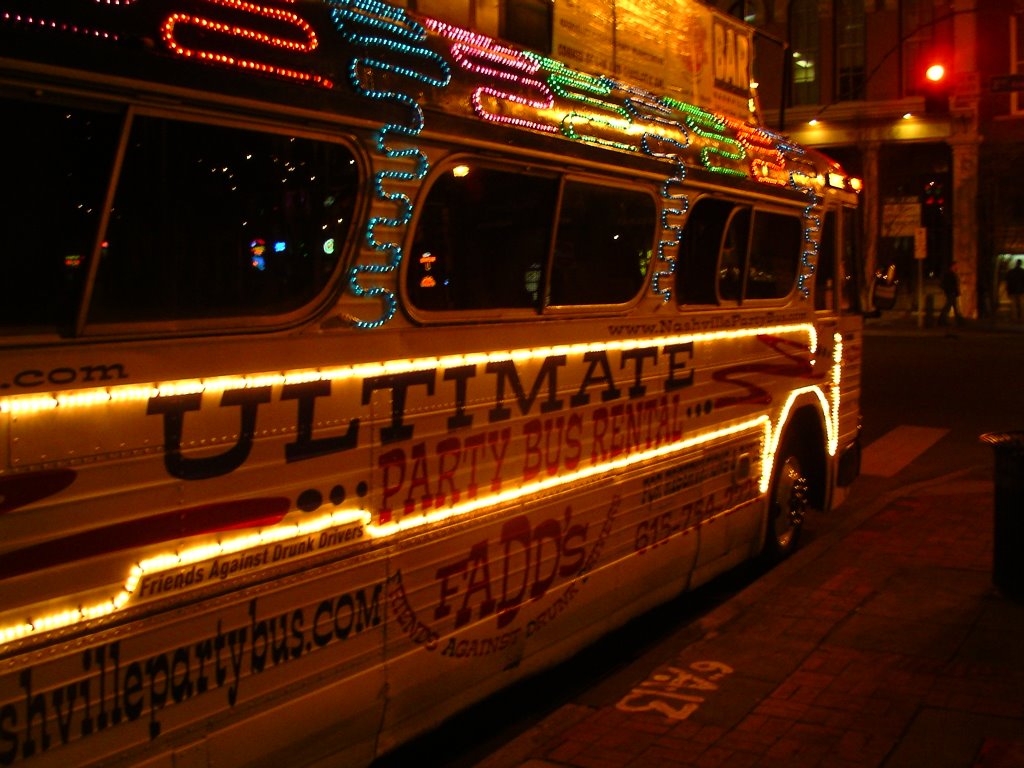
 When we travel somewhere interesting, we take as many photos as our Wal-mart camera can hold, with the hopes that a handful of the pics will turn out and be usable in one of our moronic postings. We're really happy when we get enough material for two postings, and when we spit out three, we're downright proud of our ability to make chicken salad from chicken shit!
So, join us on the Ultimate Party Bus for a final ride through Nashville. We'll enjoy some week-old leftovers, cold and stale until warmed in the microwave and spiced up with a dash of tabasco sauce from the RR kitchen. Unfortunately, one meal we can't enjoy a week later is oysters. But dang, they sure taste good when fresh out of the steamer. We can get oysters in Michigan, but they cost a buck fifty a piece and come brown and moldy. In the south, you can get 'em for a quarter and knowing they came off the refrig truck last night. Deeelicious. The only downside is the next morning, when your bottom reminds you of the oysters from the night before. It's a most unholy hangover- in your lower intestinal tract.
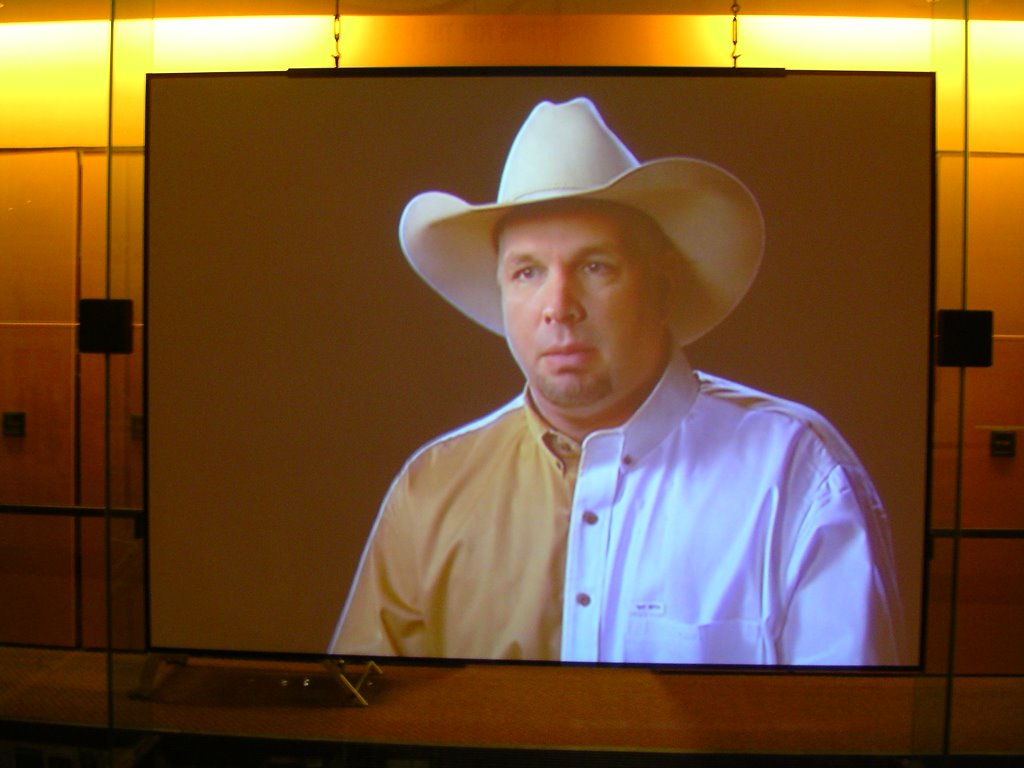 Over at the Country Music Hall of Fame, fat Garth talks up his place in the history of country music on a wall-screen TV. This guy had the C&W world in the palm of his hand until the day he announced he was no longer Garth Brooks, and wanted everyone to call him Chris Gaines. He recorded a pop-music album that no one bought. His lame attempt at establishing an alter-ego while atop one music genre hierarchy stands as one of the biggest career mis-judgements in the history of pop culture. But when the royalty checks come every month for his songs that still get heavy rotation on country music stations, we doubt he cares very much.
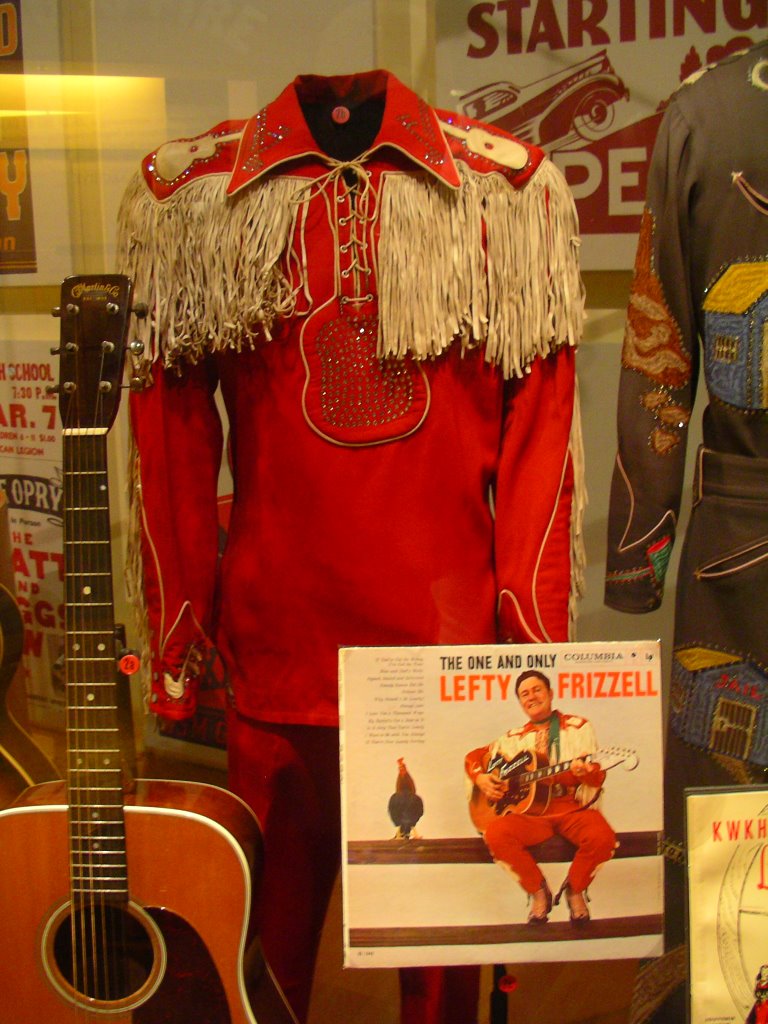 One guy who never made it to the high pinnacle of country music fame was crooner Lefty Frizzel. With a name like that, it's no surprise. You could be the best singer/geetar-picker in the land, but your name has crippled your walk to fame from the onset. Everyone thinks you are a one-handed drip. For those of you hoping to live the honky tonk dream, RR will tell you the secret to having a a big-time country music career: combine the name of your favorite pet and the street you grew up on. For us, that would be Levi Kent.
If any of y'all move to Nashville and assume the name Levi Kent and make it big, we want our cut.
3.29.2006
Nashville: The Finale

3.27.2006
Museum of Country
 Nashville, Tennessee. Home of the Country Music Hall of Fame. Ten years ago, we would have lumped a visit to this place atop our list of Stoopid American Tourist Traps to Avoid (known as the SATTA list, it includes the following monuments to all things banal: South of the Border, the world's largest twine ball, Sea Shell City, and the nearby Mr. Chicken, the plastic-legged rooster). Now that we've been to the Country Music Hall of Fame, we can attest with full conviction how utterly wrong our cynical and baseless pre-concieved notion was. (The previously-named locations will forever remain on the SATTA list, along with the shoe trees which are popping up like a bad fungus).
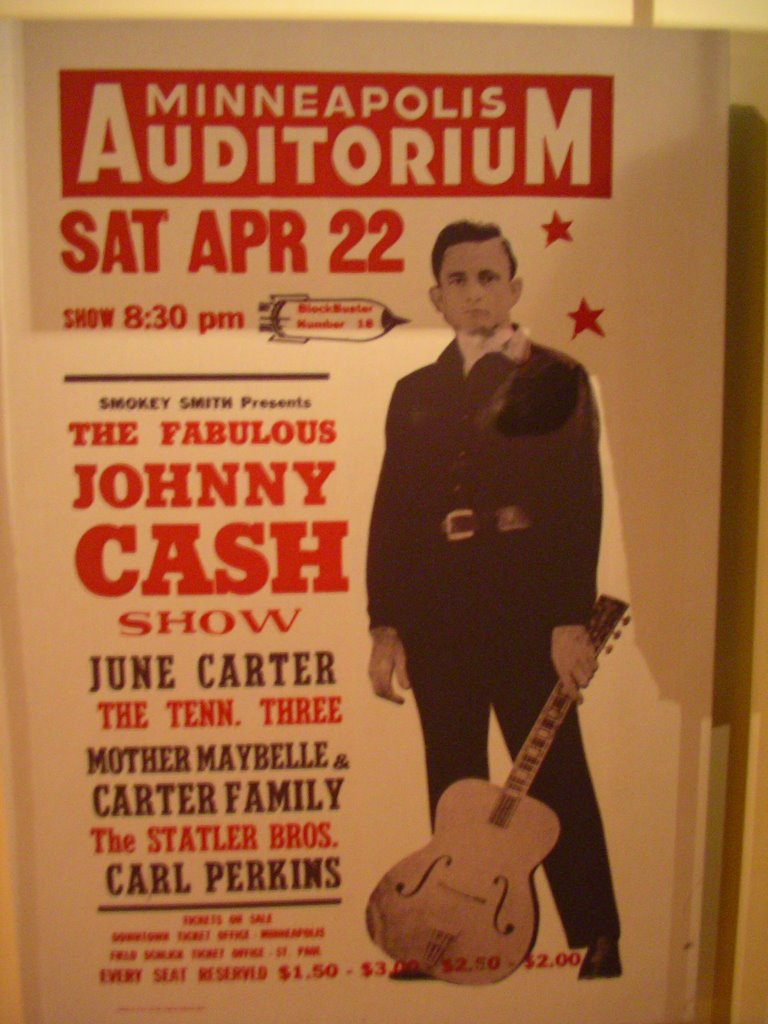 If pressed, we'd have to admit we know alot about old-school country music, and not by choice. For several years, we lived in the desert west, where the radio dial landed on one of two stations: National Public Radio, and a lone AM country station with the on-air moniker, "KZZR- The Voice of No Choice." A constant diet of NPR got old real fast. Every news story had to inject some victimization theme into the reporting. They went something like, "In ten days, the sun will supernova and the earth will heat to 10,000 degrees kelvin. The homeless drug addicts in Sao Paulo and the indigenous Togoese tribe in Ghana will be among the most impacted." Listen to All Things Considered and you will notice a similiar slant in nearly every story.
So we started listening to the scratchy AM country station, and before we could stop it, we were humming Merle Haggard and David Allan Coe songs. We started wearing Justin boots and Roper shirts. We chewed Copenhagen and drove a truck. Like those missionaries in Borneo found wearing grass skirts and eating fire-roasted monkey brain on a stick, it was a textbook example of "going native" to meld with the dominant cultural expectations. We left our dusty cowboy boots in the desert awhile back and returned to the midwest. We rarely listen to country these days and at best, know the new artists only by name. But after spending a few hours at the Country Music Hall of Fame, we offer the place up as a must-see for anyone who appreciates vintage Americana in its purest form. The museum is new and clean, and contains countless items from American icons who impacted popular culture in more ways than we realize. Johnny Cash's favorite guitar. The mixing board used by Patsy Cline to record "Crazy." A leather saddle Roy Rogers had made for Trigger. Ray Charles' sunglasses. The collection was comprehensive and complete.
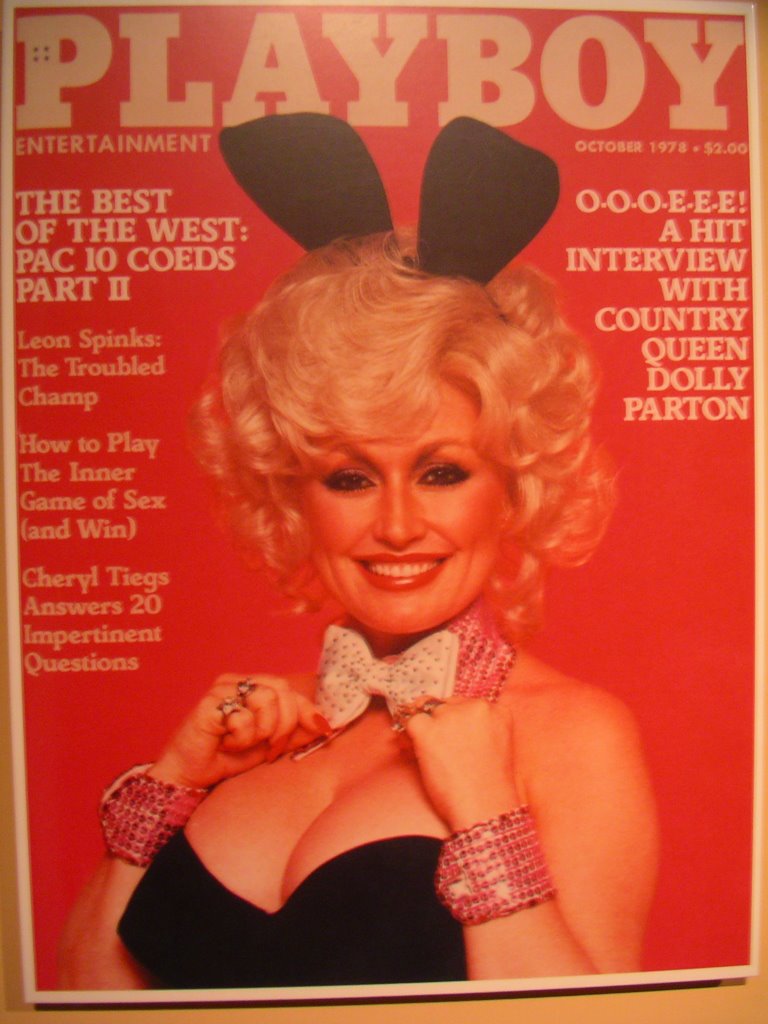 But what really entertained us was the mixture of the absurd and sublime. Around the corner from Porter Wagoner's first opry costume was Dolly Parton on the cover of Playboy magazine, circa 1978. The caption reads O-O-O-E-E-E! (Wow. You don't hear that expression much anymore). We doubt anyone was hooting O-O-O-E-E-E! after they bought the issue, went home and closed the drapes, only to discover the only "revealing" she did was in an interview.
This coat was worn by one of the Flying Burrito Brothers, an early country-rock band with a name more typical for a Tejano salsa band. The jacket seemed a little out of place, perched next to a bathrobe worn by Barbara Mandrell and a wig Reba McEntire once owned. But it had an interesting "Liberace meets Cheech and Chong" flair; sequins and nekkid women, large vibrant roses, a pickle on the sleeve, and poison ivy growing up the front. Or maybe that's cilantro. For the burritos, no doubt.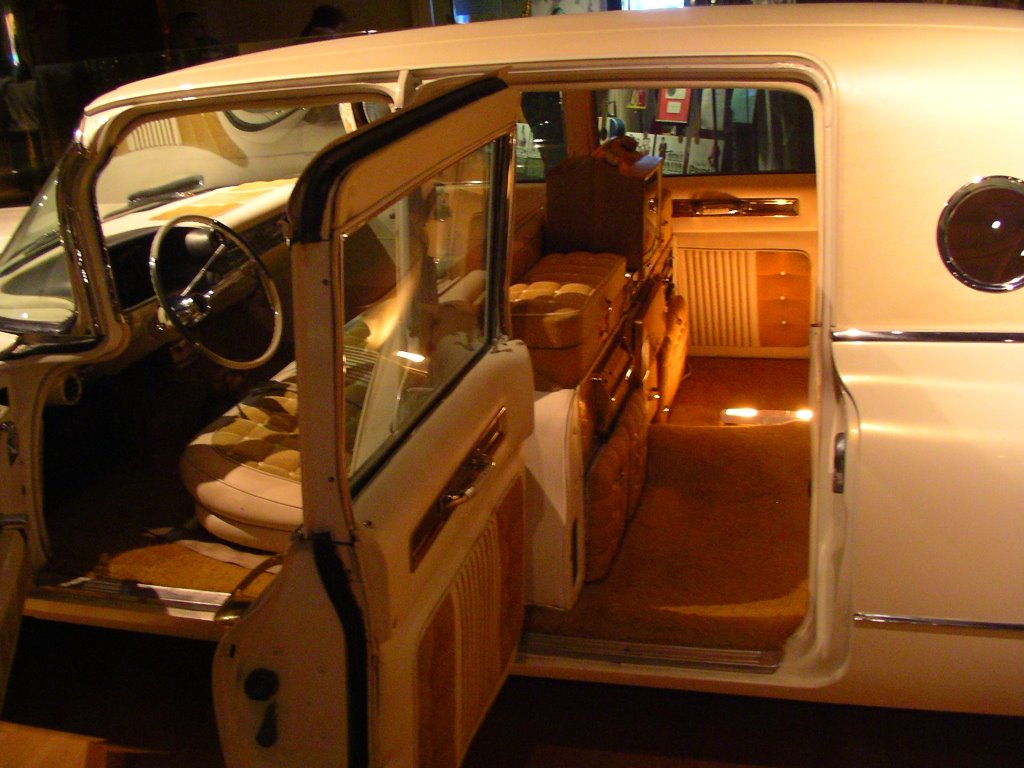 Our favorite was one of Elvis' limos. With gold-plated door handles and a mini-bar, this car was the 1974 prototype for the modern-day pimp my ride trend: a nine-inch black and white TV white and a car phone from the era when only people like Elvis could afford a car phone. The stains on the velour-covered seats were like coyote tracks in the dirt; he could have been there yesterday, sweating away after a karate workout or Vegas concert and on his way back to Graceland.
3.09.2006
As Wild as the Devil
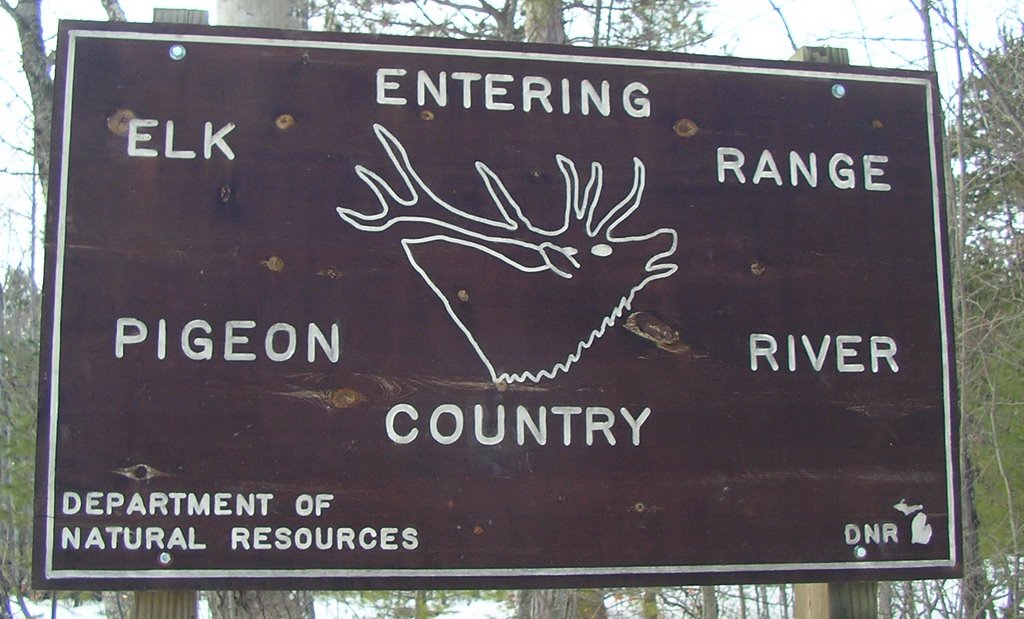 If you were to ask any of the five million souls living in the dank shadows of factory smokestacks and freeway overpasses of metro Detroit where to find the nearest wilderness area, the most common response would be a quizical look with a "dunno" or "couldn't tell you." Only a handful of people would mention Pigeon River Country, located four hours north of Detroit near the hamlet of Gaylord, Michigan.
Before we go any further, we need to define our idea of wilderness, since the concept is fluid and subjective. Compared to Alaska, is this wilderness? No. Compared to Idaho, is this wilderness? No. Compared to anywhere within a 300 mile radius around Detroit, is this wilderness? When we filter that question through the broad mix of paradigms and perceptions and ideals (real and imagined) necessary to formulate such an answer, the conclusion is absolutely. Or so we used to think. Pigeon River Country is a mix of state and privately owned lands totalling over 100,000 acres. By western standards, where the Frank Church Wilderness in Idaho is 2.3 million acres and the Yukon Delta Wilderness in Alaska is over 14 million acres, Pigeon River Country is a pimple on the nipple of Mother Nature. That said, Pigeon River has unique features of its own: High ridges encircle deep and forboding cedar bogs. The birch and spruce trees of northern latitudes mix amiably with southern gents like pin oaks and red maples and shade rivers known for blue ribbon brown and brook trout fishing. Thick woodlands provide habitat for a resident herd of over one thousand elk, the largest west of the Rocky Mountains. And perhaps best of all, not a single "Jellystone Park" or "Dollywood" or comparable schmaltzy tourist trap which sit at the front gates of Yellowstone and Great Smoky Mountains. In Pigeon River Country, the narrow dirt roads keep the motorhomes away, and the "unimproved" campgrounds (where the pit toilets smell bad and flies buzz your backside as you sit there), keep out all but the most dedicated of visitors.
 Two sister rivers, the Pigeon and the Black, share simple spring-fed origins before flowing north, nimble and pure. Beaver dams, log jams, and a shallow river bottom keep the canoe liveries and the noisy beer-guzzling frat boys from defiling their virginal spirits. Aside from a handful of hikers and hard-core fly fishermen, few people venture into Pigeon River Country. One of the most noted was a young Ernest Hemingway, who would sneak away from his parents' summer cottage on nearby Walloon Lake to go fishing on the Black River (pictured here). He later wrote of these trips in his Nick Adams short stories, and his literary description of the area was "as wild as the devil." (Hence the title of this post. Ernest would be most proud). Another famous visitor a few years back was consumate fly-fisherman and former president Jimmy Carter (back to Hemingway: years ago, we asked an old timer at the gas station in Seney, Michigan if he remembered Hemingway fishing the nearby Fox River. The old codger snickered and said EH got red-eye drunk, slept under the railroad bridge, and never wet a fishing line. So much for literary purity. He was still a hell of a writer so we'll cease further comment for a moment).
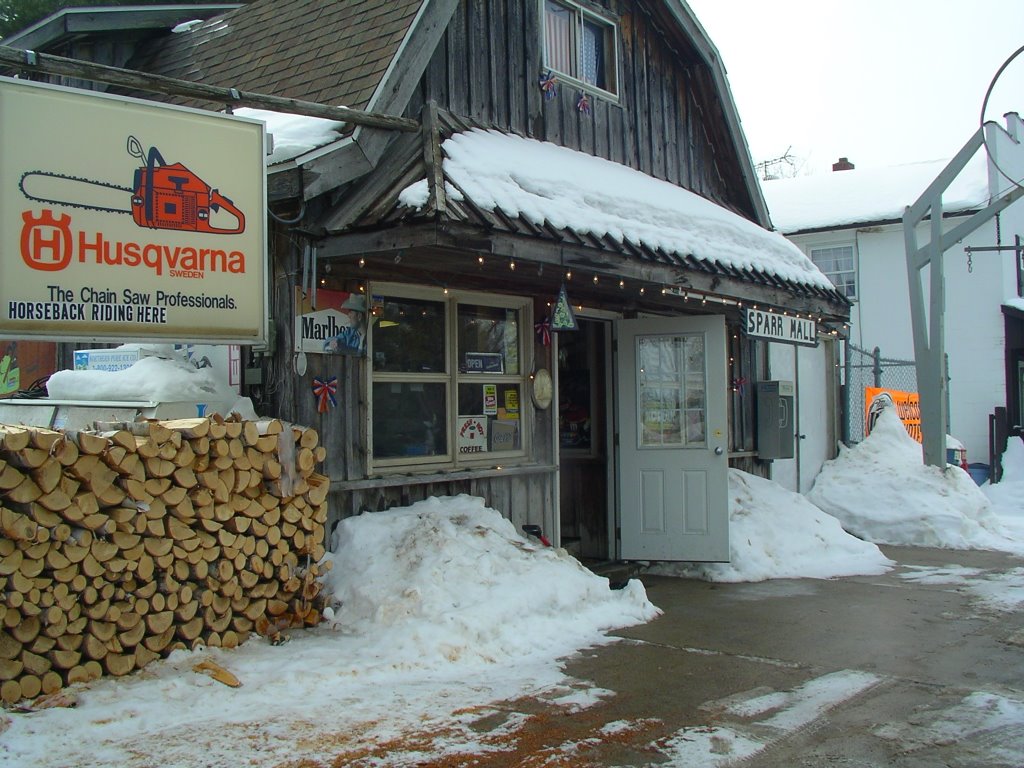 If you run out of batteries or firewood while visiting Pigeon River, one mercantile you can go to for supplies and groceries is the Sparr Mall. We have to admit: we sometimes find ourselves yearning for the simply life where you live on the fringes of civilization. Where you buy milk at the same place you get chainsaw oil. Where the only radio station that comes in clear is country/western. But then we look back upon the ten years we spent living this way, and how the realities of isolation ultimately shattered the illusion that living apart from society would somehow enlighten us.
 We've had a similiar awakening about our idealistic notions of the integrity of literature and the sanctity of wilderness as well. Hemingway, for all his literary skill, was in many ways a fraud to himself and the people closest to him. This bald eagle, our rugged symbol of American resilence and strength, sits perched above a powerline that would kill him in a nanosecond if he were to land on a transformer. Hemingway and the bald eagle once shared the same iconic status in our misguided belief that universal absolutes existed in the books we read and the places we hiked.
 Just a wing-stroke down the road, the powerline ends at one of the 15,000 oil wells that tap into the Antrim Band, the large undergound vein of oil and natural gas spanning between Petoskey and Alpena. Several hundred wells pump away inside the boundaries of Pigeon River Country. Watching bull elk gather around the clanking machines to lick the ground, made salty from the briny water sucked up from a mile below, we re-examine our paradigms about places once believed to be pristine and wild. Our definition of wilderness, just like our definition of literary purity, is a subjective concept indeed.
2.16.2006
Blizzard from the Past
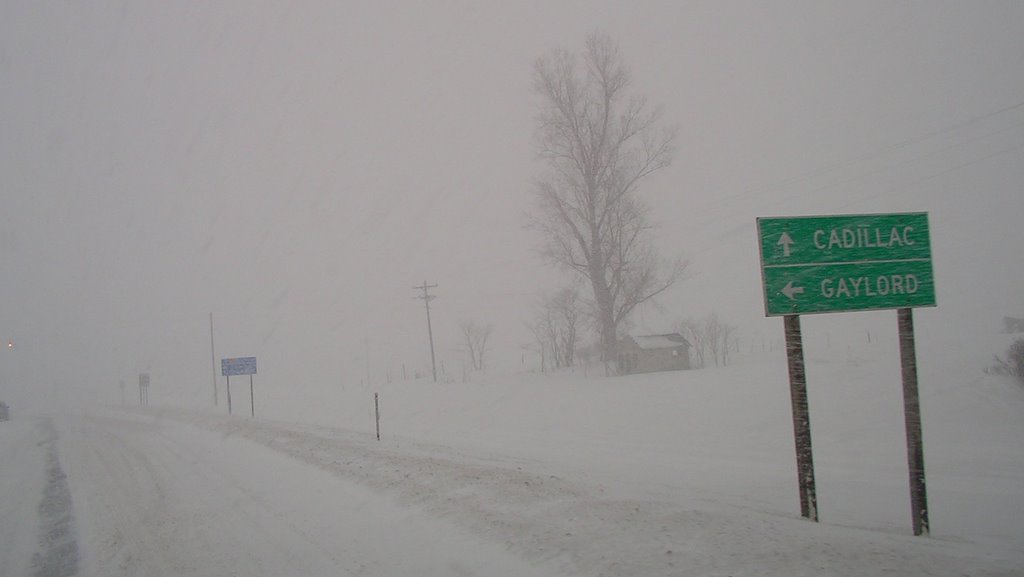 Back in the day when we ate our boogers and wore Toughskin jeans, severe blizzard storms in Michigan were as common as a pothole full of slush. Then, for reasons under current scientific debate, the frequency and intensity of these bitch storms began to wane. Looking back to the 1970's and '80's, winter has turned from wild to mild, from insane to tame. Hell, this January, we were running the trails at Peach Mountain in shorts and a sweatshirt... something never seen during those winters. Yeah, yeah, it's another sign of global warming caused by fossil fuel emisions. We'd believe that, but forever burned in our memory bank is 3rd grade science class at Hedke Elementary School, circa 1977, when we were taught how pollution is preventing sunlight from reaching earth, and someday the world would freeze into a giant dirty slushball. So who really knows?
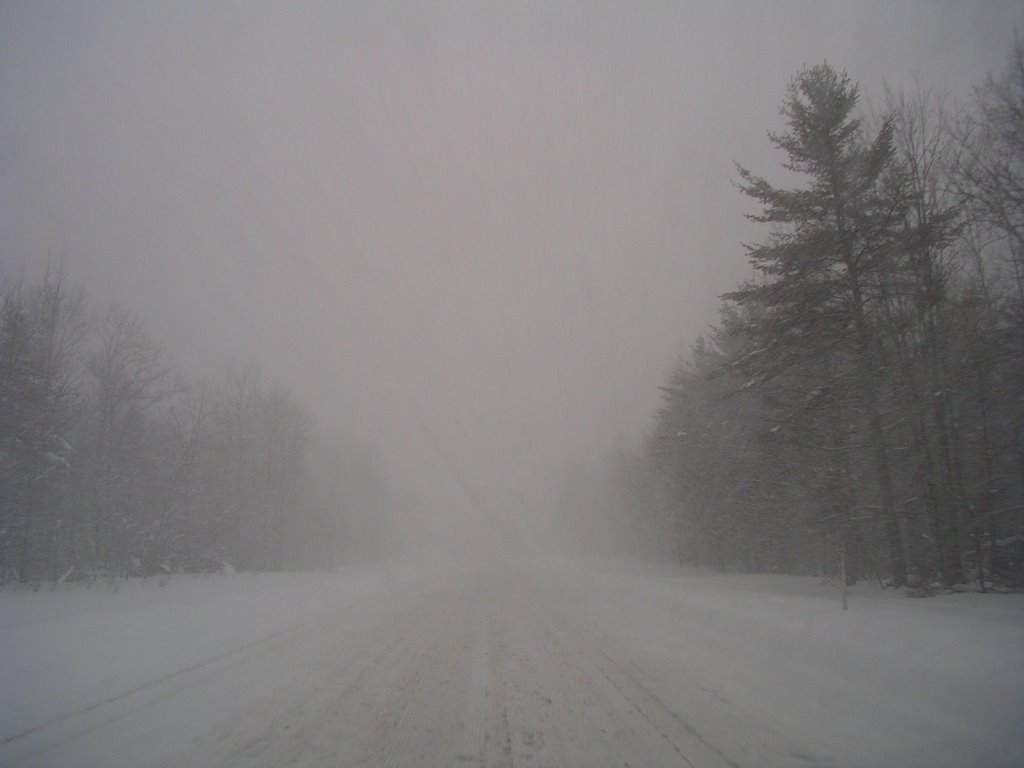 Just as we were getting comfortable with a climate more typical of, say, northern Alabama, Old Man Winter came home, whiskey drunk and pissed. If you were anywhere north of Saginaw today, you witnessed an old school snowstorm the likes of which we haven't seen in years. It was classic artic blast: predicted snowfall was in feet, not inches. The travel advisory warning ends at 6 pm, three days from now. On the road, visibility was next to zero. The windshield wiper fluid froze and rendered the wipers clumpy and useless. The average speed on I-75 near Grayling (above photo) was 25 mph, at best. One highlight of the slow ride were the lightning flashes- the gray sky would burst brilliant white and illuminate zillions of snowflakes. It was surreal and awesome and not something we recall ever seeing before.
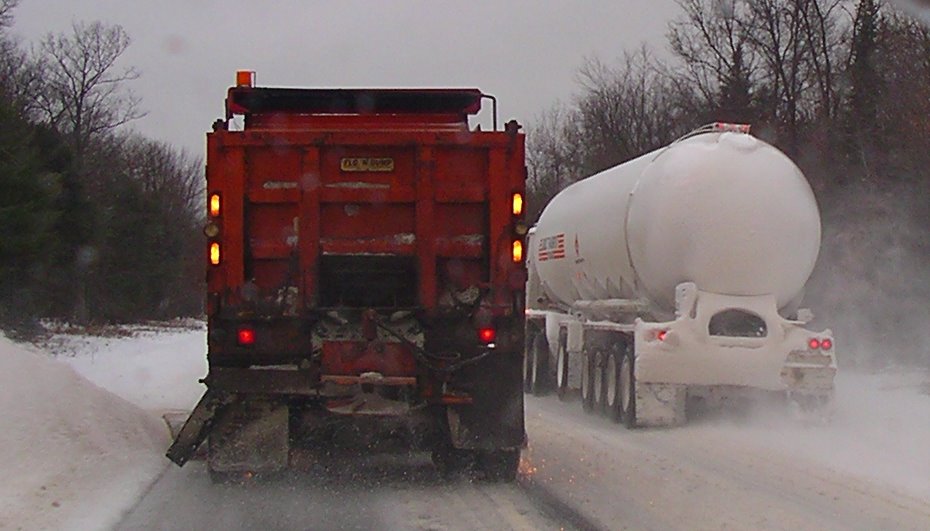 The slow drive wasn't lacking in human entertainment either, provided by fellow motorists. Witness this thrilling scene: the snowplow is clearing a lane and throwing sparks everywhere. On the right, a tanker carrying gasoline or propane or liquid hydrogen loses patience and decides to pass. He arcs wide to avoid the plow blade, and for a pulse-jumping moment, veered right, then left, then right. He regained control and completed the pass, leaving the size and color of the fireball to our imagination, had the maneuver not worked out so well.
 Other drivers weren't so lucky. Some of them, no doubt, were unlucky schlubs who hit a patch of ice or deep snow and biffed it. We hope they're home now, safe and warm. But we have no sympathy, none, for the idiots who lost control after driving like it was another day of owning the highway. A Hummer H2 tailgated us for a mile before zipping way at an unsafe speed. We predicted we would be seeing him again, and sure enough, ten miles later, he was stuck in the snowbank calling for a tow. Lesson learned, we hope.
1.27.2006
SB XL in the D: The Good, the Bad, and the Ugly
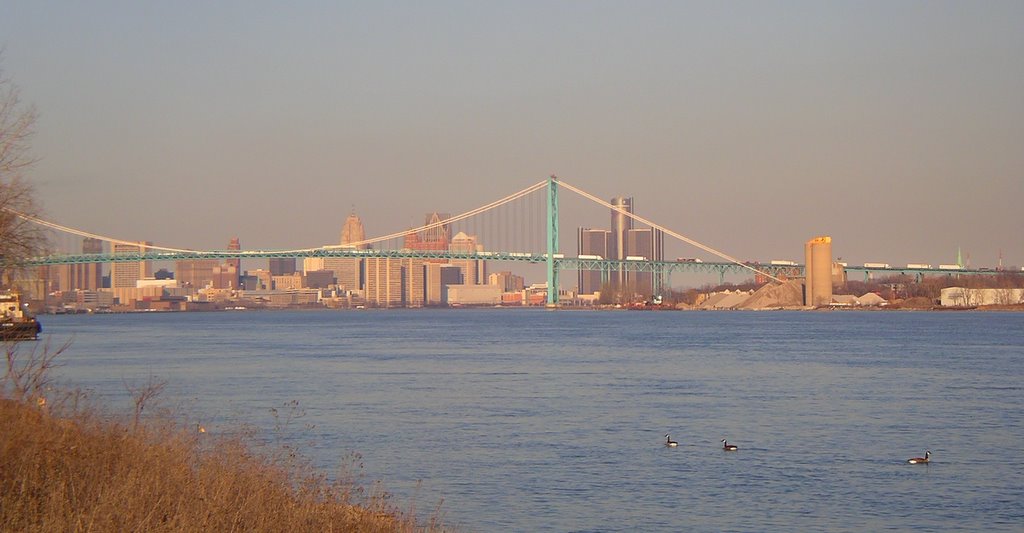 With a week to go until the Big Day, the River Rant Committee on Major Event Preparation is proud to report that, by and large, the City of Detroit is looking better than it has in 30 years and is ready for the arrival of tens of thousands of football fans, the international press, and world-wide scrutiny. But only if your definition of Detroit is the limited to the downtown Central Business District ("CBD"). As soon you head one mile north, south, or west, it's as bad as ever.
 The Good
Never before have we seen the CBD looking so clean and fresh, with new businesses and restraurants and public facilities. The streets have been cleaned to where you could eat maple-walnut ice cream off the asphalt. The regular downtown derelicts who pester every pedestrian for a cigarette and a dollar have been rounded up and moved elsewhere (or displaced by the SB contruction projects). Long empty storefronts on Woodward Avenue have been boarded up and painted, or- even better, temporarily re-opened as Super Bowl XL apparel shops.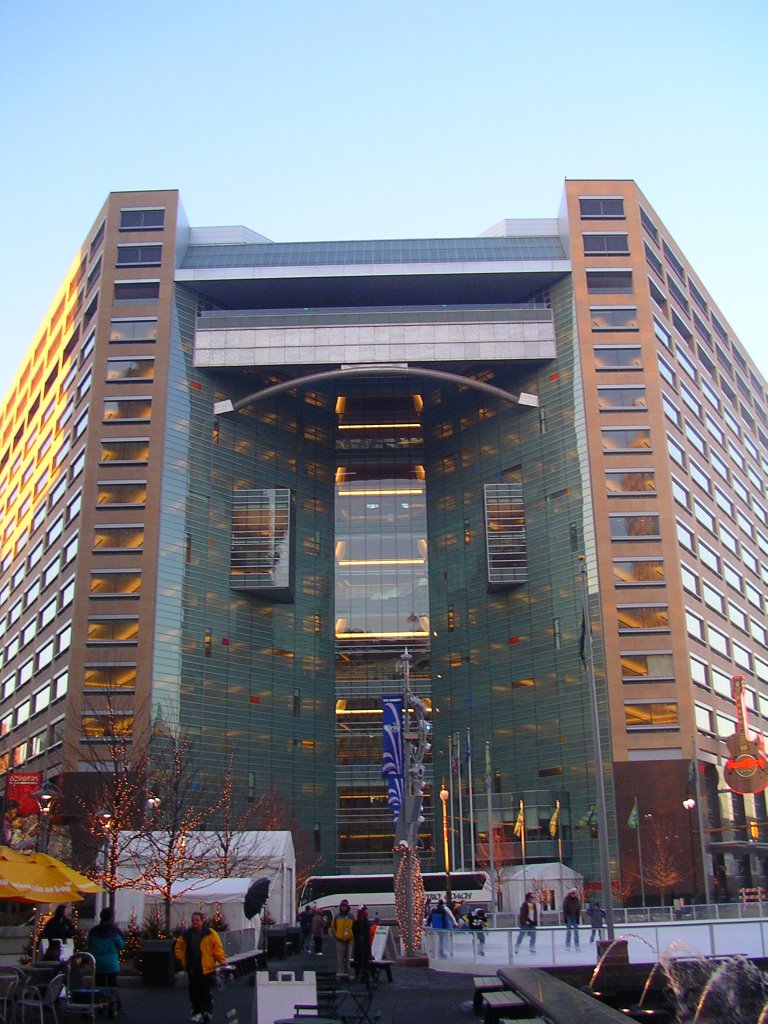 We have to give credit where credit is due, although making such deter-mination isn't crystal clear. Current Mayor Kwame Kilpatrick would like to take sole responsiblity for every improvement in the city (of course), but the fact is former Mayor Dennis Archer and several local philantropists (like Roger Penske and Mike Illitch) deserve equal, if not more credit. And a great deal of respect goes to companies like Compuserve, who invested millions into building their corporate headquarters in Detroit (pictured here on a rare clear Michigan winter day). Despite the improvements, this fact remains: investing entreprenurial capital in the city remains a risky and couragous endeavor. The endlessly-persistent obstacles of high taxes, an obscene crime rate, corrupt local politics, and inefficient municipal services make rebuilding this once-prized American city as daunting as setting up shop in Fallujah or Mosul.
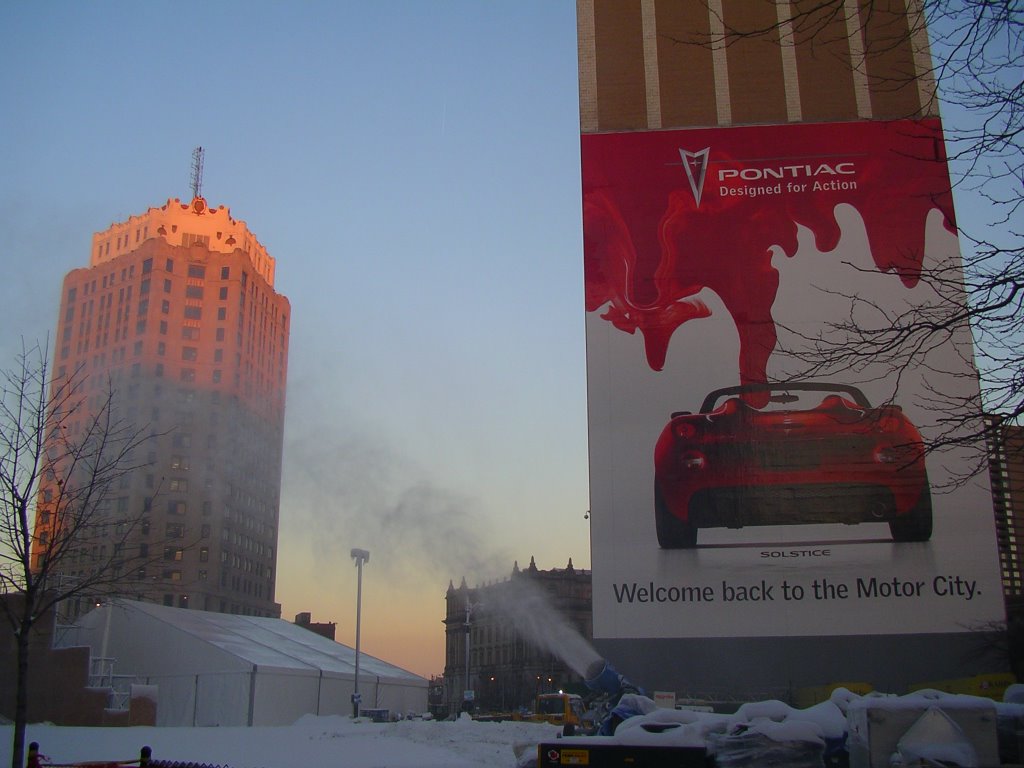 On Superbowl weekend 2006, as U.S. troops in Rumalah and Kabul and other bloody God-forsaken locales around the world watch the Big Game, Detroit will embody all that makes us American. As crews raised warming-tents and adorned the trees with Christmas lights, we witnessed sparks of kinetic energy and a spirit of renewal long absent in this challenged city. For a tranquil minute, as families skated in the January sun at Campus Martius and snow-machines blew fake snow for a sledding hill, as the waning half-light cast a warm orange glow on the skyscrapers, it felt like we were standing in one of America's most regal of cities...
The Bad
Then reality abruptly reared it's ugly head and shattered the bucolic moment, right in front of us and impossible to ignore (be patient, it takes a couple of minutes to download. Not like you're doing anything important right now. Hell, if you read RR, you obviously have more time than you know what to do with). He was a food service employee at the nearby Au Bon Pain coffee shop. She was an ex-girlfriend or wife or who knows. Security guards hustled her off the premises, and his boss came outside and yelled at him to "keep that shit away from here." An ephinany followed; the CBD ain't the real D. So we left and went searching for the grimy town we've known for the last three decades. And the Ugly
It took all of five minutes before we found true Detroit. Despite the downtown improvements, despite the new ballparks, despite the new cultural features, the city remains one of the most destitute, most crime ridden, most impoverished places in the developed world. Nowhere else (but Baghdad, perhaps) will you find more than 10,000 abandoned homes and businesses. The level of blight is impossible to describe. In neighborhoods like Del Ray and St. Aubin, it's not unusual to see entire city blocks where every home has been abandoned and all that remain are burned-out shells. The only inhabitants left are the addicts and the predators, the hustlers and the truly downtrodden.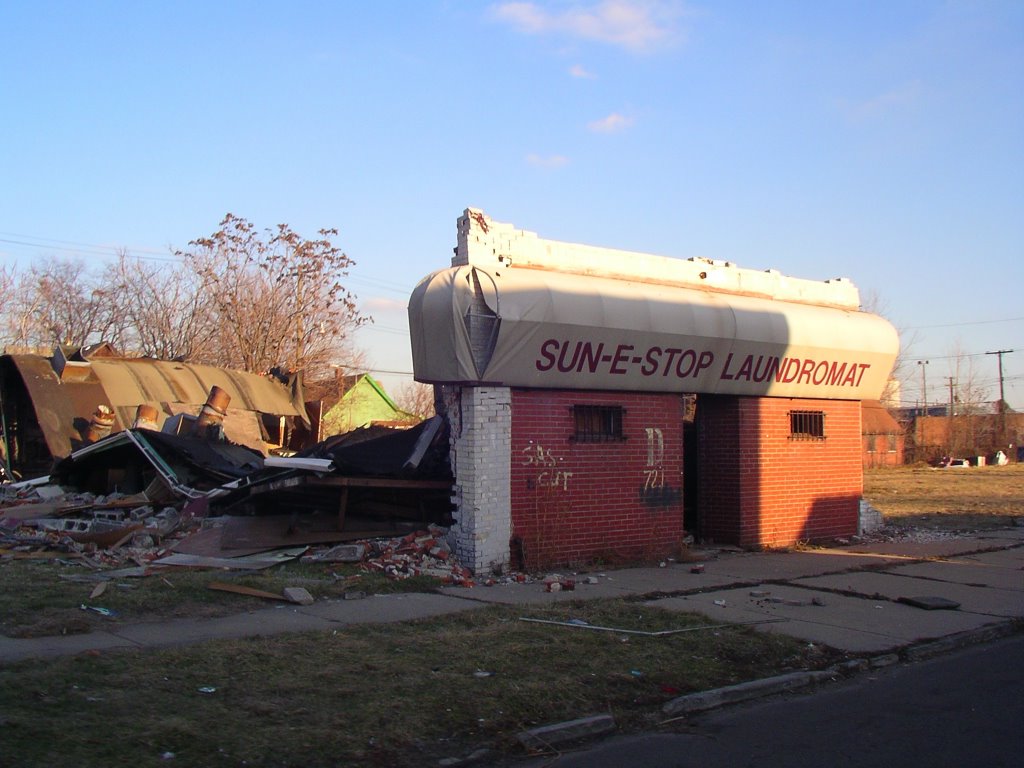 In some areas, it's as if the buildings have been stricken with some rare degenerative disease, the kind that causes a structure to implode on itself. This is a most unique Detroit phenomenon; why do so many buildings made of brick and steel collapse on their own volition? Vandalism can not bear total responsibility. And how does a canopy made of canvas outlast brick walls and a steel girder roof? So many questions in the D are not easily answerable.
 The old banks, with their thick walls of reinforced cement, are the only structures resistant to this plague. The roofs may collapse (through the windows at this branch you can see tree saplings fifteen feet tall shimmering in the slot-roof shards of sunlight), but the four sides will still be standing come Armageddon day. This must have been apparent to local clergymen as well, for when the banks closed they often became churches. Handpainted signs such as "The New Detroit Apostolic Temple of Holiness" or "The Greater Mt. Zion House of Praise" are posted underneath the old mason-cut "National Bank of Detroit" inlays. But in the end, even God's chosen ones recognized this was not the promised land of Canaan and departed.
 In the last forty years, nearly 1,000,000 residents have left the city. It's not just the neighborhoods that remain abandoned and forlorn. Numerous former auto-manufacturing businesses, once an intregral part of Detroit's golden age of industrial superiority, sit vacant. The future does not bode well. In the last week, Ford Motor Company announced a lay-off of 30,000 employees (nearly 1/3 of their workforce). Analysts are predicting a similiar down-sizing at General Motors. The only new automotive development in the state is a Toyota design facility, to be built an hour away from Detroit in pastoral Saline.
 Even the temporary buildings, brought in (we suspect) to facilitate the excavation of copper piping and scrap iron and whatever else of value, are left to the visagoths in the rush to leave the city. The vultures don't even give a shit. Sociologist James Q. Wilson refers to this breakdown of social mores as the "broken windows" theory; when delapidation and vandalism isn't stopped at the onset in distressed communities, it spreads like an agressive and malignant cancer.
 We hope SB XL goes off without a hitch. We hope the tens of thousands of people who come from around the world have a great time and enjoy themselves. We hope the millions of dollars generated from the event provides a much needed (albeit temporary) shot in the arm to the local economy. But we know, that come February 6, after everyone leaves and the Hollywood glitterati disappears, the D will still be the D, and except for the CBD, little will have changed.
1.13.2006
The Kinsey Report
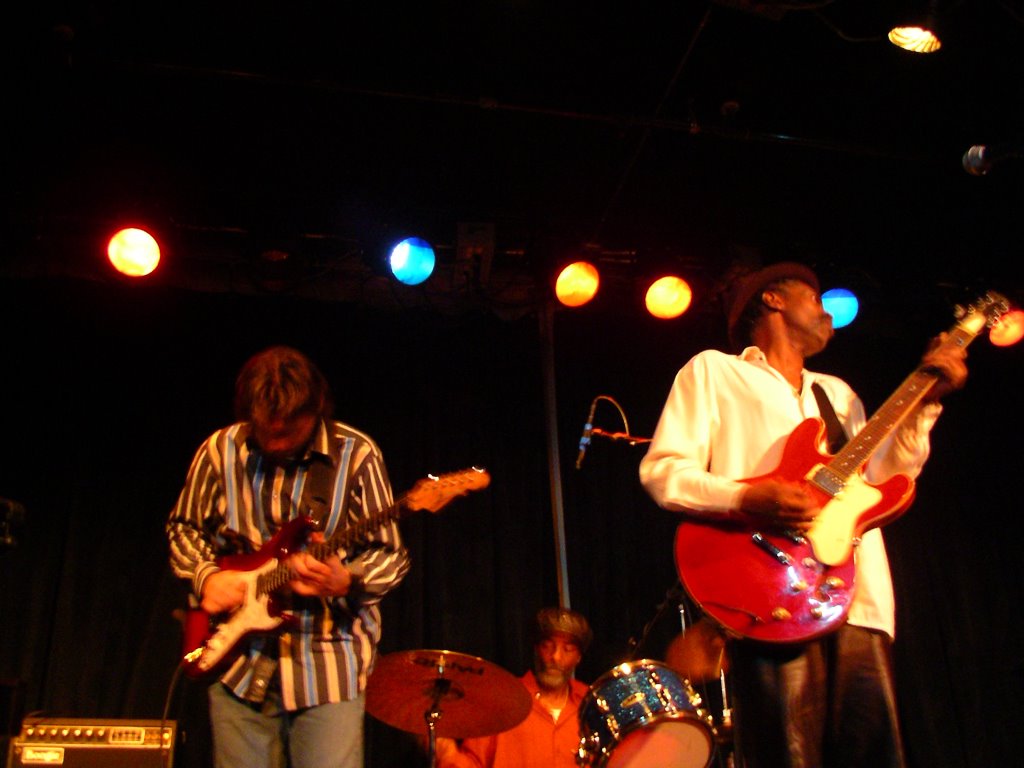 Sweet Jesus, we are coming home! The pagans may have celebrated Friday the 13th, January 2006 in their dark ways, but for River Rant, church was held at The Ark in Ann Arbor, where we stood witness to the holiest blues band in the country.
And we don't say this lightly. We've seen many of the living masters: Robert Cray, Sonny Seals, Buddy Guy, Matt "Guitar" Murphy, Lonnie Brooks, to name a few. Back in the college day, Rick's American Cafe in East Lansing would host the Chicago greats. Many a night was spent absorbing 10 cent Old Style drafts and bacon-grease slide guitar blues. But a sad transformation occurred: the bar changed management, and the new owners determined college students would fill the cash drawers regardless of who entertained them. So why pay internationally recognized musicians when you can make more money by hiring a college student DJ to spin Moby cd's? It was a damn shame.
The Kinsey Report is the varsity squad of shot n' a beer and broken guitar string blues. Raised by Mississippi blues purest "Big Daddy" Lester Kinsey, sons' Donald, Kenny, and Ralph grew up playing in their father's band. Oldest son Donald broke from the family in the 1970's and became Bob Marley's guitarist. The prodigal son returned to the fold in the early '80's and added a reggae funkgrove to their sound.
After going to Kinsey Report shows for years in East Lansing, the last time we saw them was in Jackson Hole, Wyoming in 1992 at the Mangy Moose . Then everything fell apart. We moved to the back corner of nowhere for 10 years and lived under a cow pie. Big Daddy died in 1995, right when the genre began to fade in popularity. The band quit recording and for a while, stopped touring. They're back, and sound better than ever. New member White Lightning is a blues guitar virtuoso. His dirty riffs crack thick and deep and come from a forboding place- like a certain Mississippi delta crossroads where Robert Johnson sold his soul to the devil. He's got the mojo hand, and must've paid a hell of a price to get it.
Here's a juicy piece of old school rockin' blues, served raw with a whiskey shot.


